Braised Beef Tendon Recipe: Tender Asian Comfort Food
A slow braise turns tough beef tendon into silky, rich, collagen-packed bites with deep savory flavor.
This braised beef tendon recipe uses a simple blanch, aromatic spices, and gentle heat to create tender tendon with a glossy sauce. I’ll show you how to choose, clean, season, and cook beef tendon, plus offer pressure cooker and slow cooker methods for reliable results at home.
What Makes Braised Beef Tendon Special
Beef tendon is the thick, strong connective tissue found around a cow’s joints. It contains very little meat, but it is rich in collagen. When cooked slowly, that collagen softens and gives the tendon its famous silky, springy texture.
A good braised beef tendon recipe balances three things:
• Long cooking time for tenderness
• Aromatics for depth
• Enough liquid to keep the tendon moist as it cooks
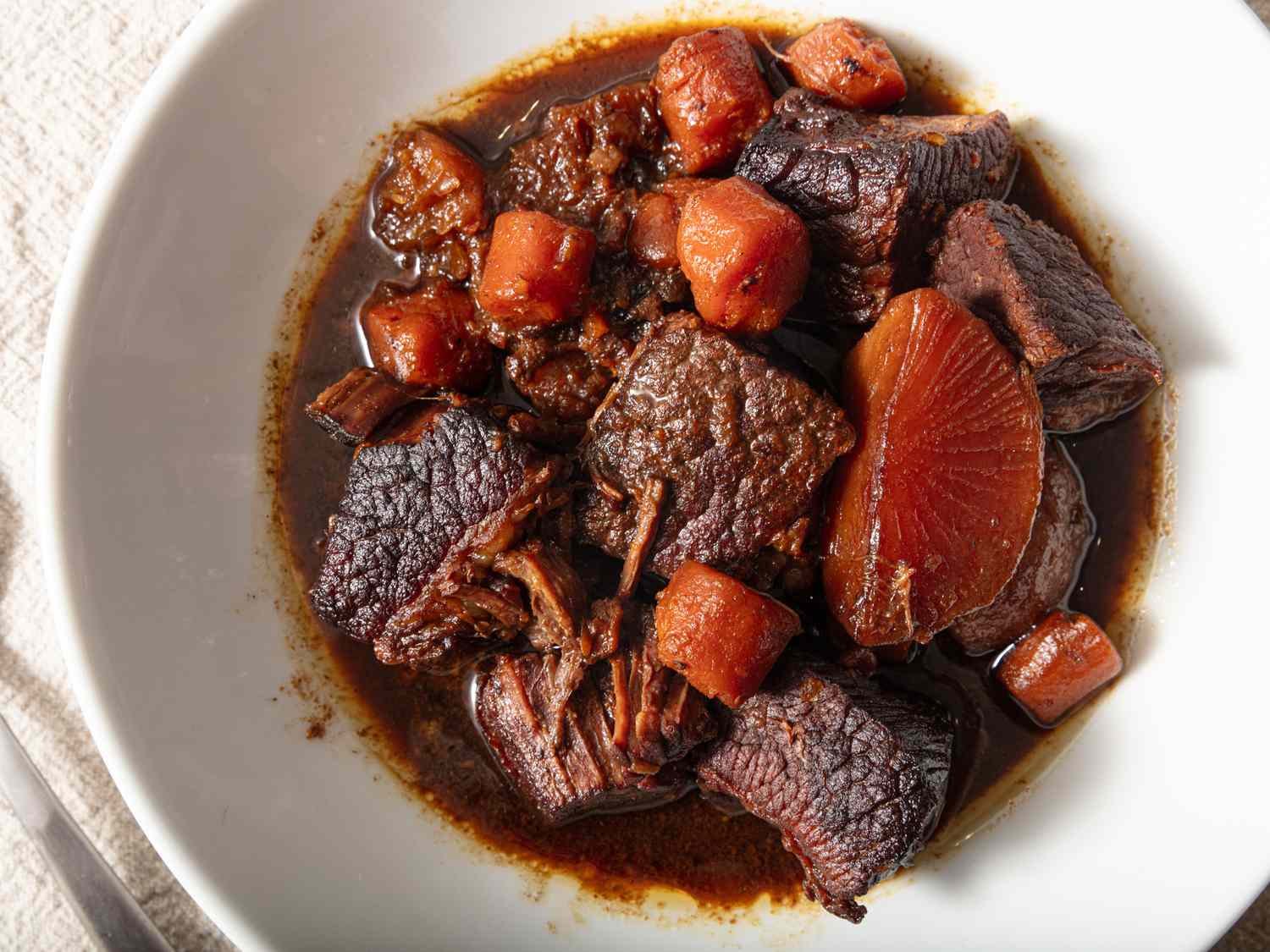
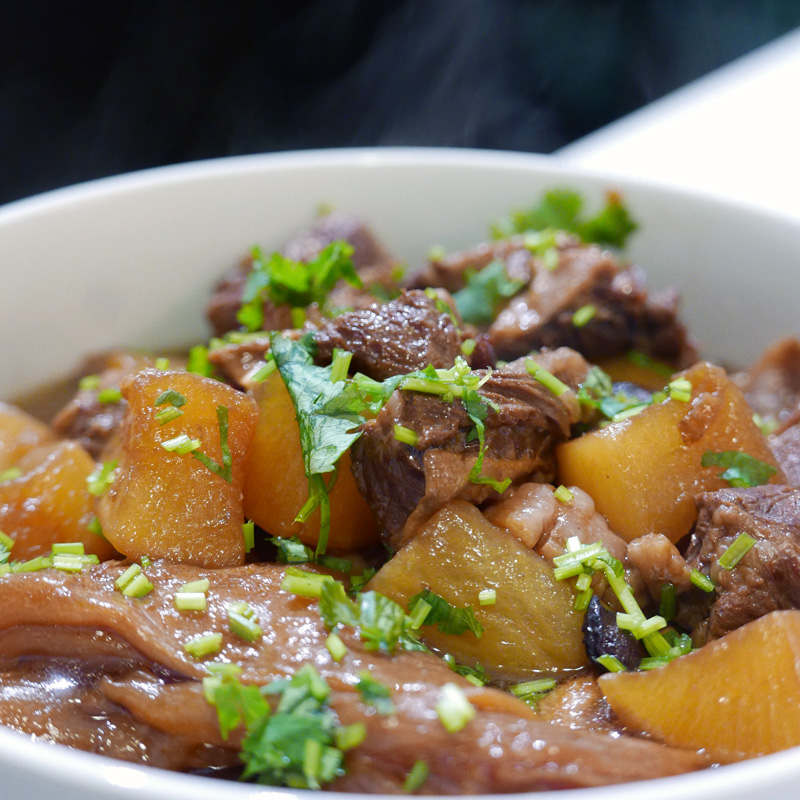
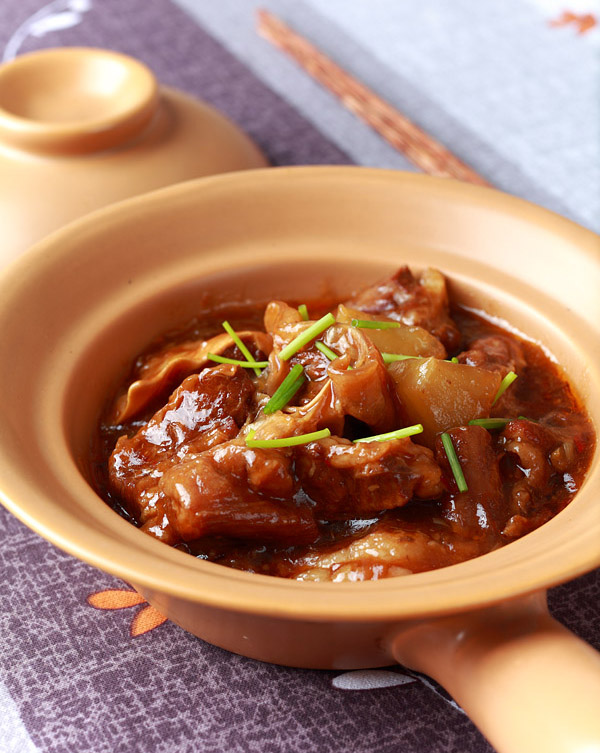
The finished tendon should feel soft but not mushy. It often has a gentle chew, like a tender noodle or soft piece of cartilage. The sauce should cling to each piece and taste savory, warm, and slightly sweet.
This dish is common in several Asian cuisines. Chinese-style versions often use soy sauce, star anise, ginger, and rice wine. Vietnamese versions may use fish sauce, cinnamon, and herbs. Korean preparations can include soy sauce, garlic, and sesame. The recipe below follows a classic soy-based braising style while leaving room for personal changes.
Braised Beef Tendon
A tender and flavorful dish made with beef tendon, slowly braised in aromatic spices and a savory sauce. This recipe offers both slow cooker and pressure cooker methods to achieve perfect tenderness.
Ingredients
Instructions
- Thaw the beef tendon if frozen, then rinse it under cold water.
- Place the tendon in a large pot, cover it with cold water, and bring it to a boil. Boil for 8 to 10 minutes to remove impurities.
- Drain the tendon and rinse it well. Wash the pot to remove any residue from the blanching process.
- Cut the tendon into large 2-inch pieces for better shape retention during braising or leave whole if preferred.
- In a heavy pot or Dutch oven, heat the cooking oil over medium heat. Add the quartered onion, crushed garlic, sliced ginger, and large green onion pieces. Sauté for 2 to 3 minutes until fragrant without burning the garlic.
- Add the blanched tendon to the pot. Pour in the low-sodium soy sauce, rice wine or sherry, brown sugar, beef broth or water, and add the whole spices: star anise, cinnamon stick, bay leaves, and black peppercorns.
- Ensure the liquid covers most of the tendon. If it does not, add more water until it reaches at least two-thirds up the tendon pieces.
- Bring the liquid to a boil, then reduce the heat to maintain a gentle simmer. Cover the pot and braise for 3 to 4 hours, checking every 45 to 60 minutes to turn the tendon and add hot water as needed if the liquid level drops too low.
- After 3 hours, begin testing the texture of the tendon using a chopstick or fork. It is ready when it feels soft but retains its shape; if it is still rubbery, continue cooking until tender.
- Once tender, remove the tendon from the pot and let it rest for 10 to 15 minutes. Discard whole spices and strain the sauce if desired for a smoother finish.
- To thicken the sauce, simmer uncovered for 5 to 10 minutes. Stir in the toasted sesame oil immediately before serving.
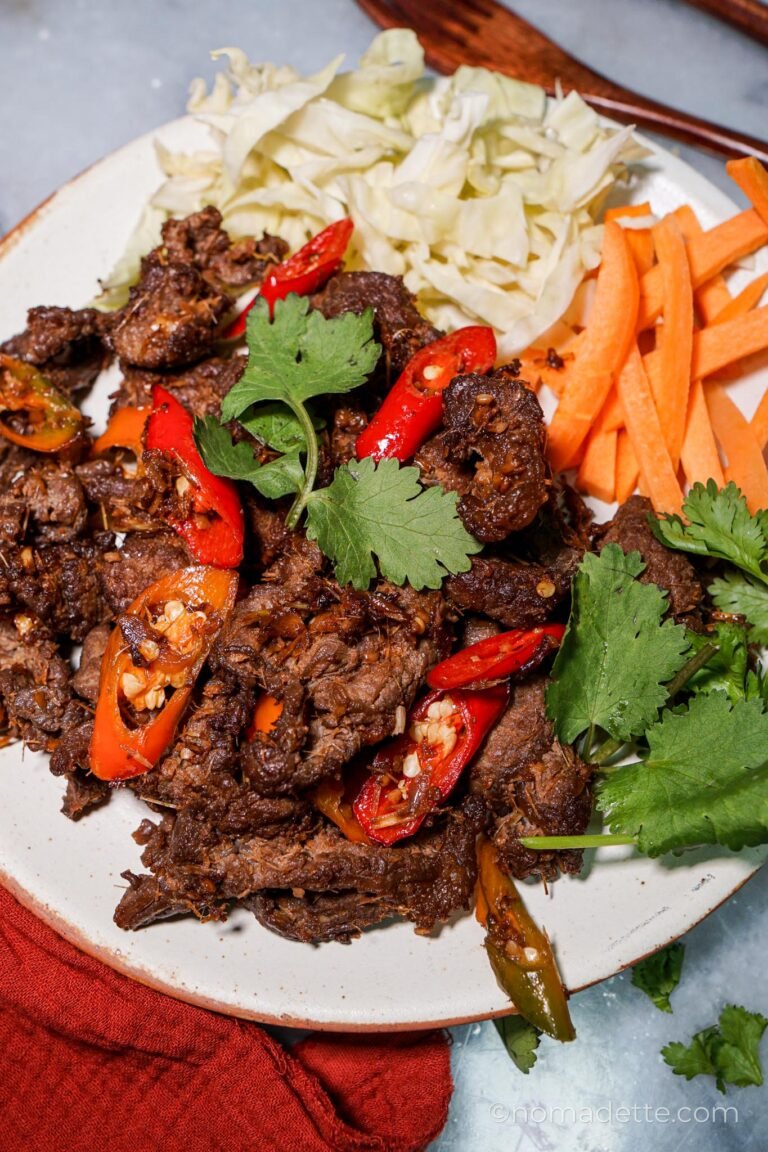
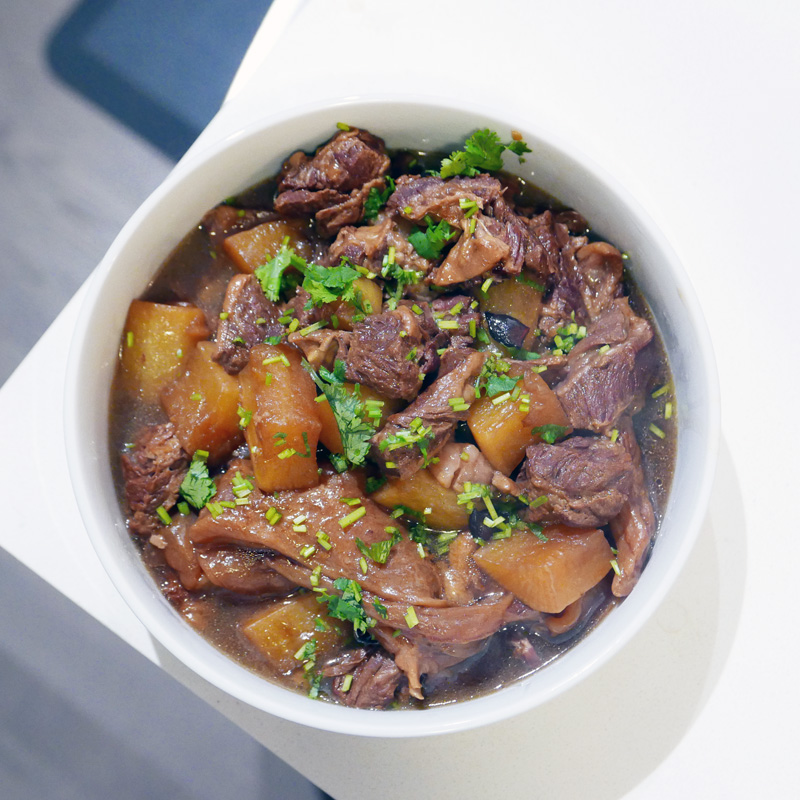
- Slice the tendon (if not done before) and serve with sauce poured over it. Garnish with green onions, cilantro, red chili, toasted sesame seeds, and serve with blanched bok choy or steamed white rice or noodles.
Notes
- This dish is great for meal prep as it can be made ahead and reheated.
- Adjust the spices and sauces to match your flavor preferences; for instance, add fish sauce for Vietnamese flavors or sesame oil for Korean touch.
- Pair with steamed vegetables or noodles for a complete meal.
Pressure Cooker Method
A pressure cooker can shorten the cooking time while still producing tender beef tendon. Use the same ingredients and blanch the tendon first.
Add the tendon, aromatics, sauce, and liquid to the pressure cooker. Do not fill the cooker above its recommended limit. Lock the lid and cook at high pressure for 75 minutes.
Let the pressure release naturally for at least 20 minutes. A quick release can cause hot liquid to splatter and may leave the tendon firmer than expected.
Open the cooker and test the texture. If the tendon is still too firm, cook it under pressure for another 10 to 15 minutes. The exact time depends on the thickness of the tendon and the pressure cooker model.
After cooking, transfer the tendon to a bowl. Use the sauté setting to reduce the sauce if needed. This method is especially useful when you want a braised beef tendon recipe on a busy weekday.
Slow Cooker Method
The slow cooker gives the most hands-off result. Blanch the tendon first, then place it in the slow cooker with the aromatics, sauce, and enough liquid to cover most of the pieces.
Cook on low for 8 to 10 hours. Begin checking at 8 hours. Some tendons become tender sooner, while thick pieces may need the full cooking time.
Avoid opening the lid often. Each opening lets heat escape and can add cooking time. If the sauce looks thin, remove the tendon after it becomes tender and reduce the liquid in a saucepan.
The slow cooker method works well for meal planning. You can cook the tendon overnight, chill it in the morning, and reheat it for dinner.

How to Serve Braised Beef Tendon
Braised beef tendon has a rich, sticky texture, so it pairs best with fresh or lightly cooked foods. Serve it warm with one or two simple side dishes.
Good serving ideas include:
• Steamed jasmine rice
• Rice noodles
• Stir-fried bok choy
• Pickled mustard greens
• Cucumber salad
• Blanched Chinese broccoli
• Steamed buns
• Fresh cilantro and green onion
Slice the tendon thinly for a more delicate bite. Cut it into thicker chunks if you enjoy a firmer, more substantial texture.
You can also chill the tendon in its sauce overnight. The sauce will become firm because of the natural collagen. Reheat it gently until the sauce loosens. This often improves the flavor because the tendon has more time to absorb the braising liquid.
For an appetizer, place chilled slices on a plate with chili oil, black vinegar, and fresh herbs. For a main meal, serve larger pieces over rice with extra sauce.
:max_bytes(150000):strip_icc()/20250306-SEA-CantoneseBraisedBrisket-AmandaSuarez-Beauty1-64-1ab5c84673f042f7abba2dec1be4b076.jpg)
Tips for Tender, Flavorful Results
Keep the heat low
A gentle simmer is better than a rolling boil. Slow heat gives the collagen time to dissolve into gelatin without destroying the tendon’s texture.
Use enough liquid
The liquid should cover most of the tendon during cooking. Add hot water instead of cold water if the level drops. Cold water can interrupt the simmer and extend the cooking time.
Do not add too much sugar
Sugar helps round out the salty soy sauce, but too much can make the sauce sweet and heavy. Start with 2 tablespoons and adjust near the end.
Taste after reducing
The sauce becomes saltier as it reduces. Taste before adding extra soy sauce. If the flavor is too strong, dilute it with water or unsalted broth.
Let the dish rest
A short rest allows the sauce to settle and makes the tendon easier to slice. For even deeper flavor, cool the tendon in its sauce and reheat it the next day.
Remove whole spices
Star anise and cinnamon are powerful. Leaving them in the pot too long can overpower the dish. Remove them before serving or strain the sauce.
My most useful lesson with this dish is simple: do not chase tenderness by turning up the heat. Beef tendon responds to time, not force. A calm simmer produces a silky result, while aggressive boiling often creates a messy texture.
Common Mistakes to Avoid
Skipping the blanch
Unblanched tendon can make the sauce cloudy and strong-smelling. Blanching takes only a few minutes and gives the final dish a cleaner taste.
Cutting the tendon too small
Tiny pieces can break down before the center becomes tender. Use large pieces during cooking, then slice them after the braise.
Using too much liquid
Excess water weakens the sauce and can make the dish taste flat. Add only enough liquid to keep the tendon mostly covered.
Cooking at a hard boil
Strong boiling can cause the outer layers to separate. Keep the heat low and check that the liquid is barely bubbling.
Serving it too soon
Tendon needs a few minutes to cool before slicing. If you cut it while it is extremely hot, the pieces may slide apart.
Adding salt too early
Soy sauce, oyster sauce, and broth can all contain salt. Taste the finished sauce before adding more seasoning.
Ignoring food safety
Cool leftovers quickly in shallow containers. Refrigerate them within two hours and use them within 3 to 4 days. Reheat until steaming hot, and discard leftovers that smell sour or look unusual.
Nutrition and Dietary Notes
Beef tendon is mostly connective tissue. It provides collagen and protein, but the nutrition can vary by preparation. The sauce may also contain a substantial amount of sodium because of soy sauce and oyster sauce.
To make the dish lighter in sodium:
• Use low-sodium soy sauce
• Replace some soy sauce with unsalted broth
• Skip the oyster sauce
• Serve smaller amounts with vegetables and rice
• Avoid drinking large amounts of the braising liquid
Collagen-rich foods can fit into a balanced diet, but they are not a cure for joint pain or a replacement for medical treatment. Beef tendon is also not suitable for people who avoid animal products.
Anyone with a beef allergy, certain dietary restrictions, or a medically prescribed low-sodium diet should adjust the recipe with professional guidance.
Storage, Freezing, and Reheating
Store cooked tendon in an airtight container with enough sauce to keep it moist. Refrigerate it promptly and use it within 3 to 4 days.
To freeze it, divide the tendon and sauce into meal-size portions. Freeze for up to 2 to 3 months for the best quality. Thaw it overnight in the refrigerator.
Reheat the tendon in a saucepan over low heat. Add a splash of water if the sauce has become too thick. You can also reheat it in the microwave in short intervals, stirring between each interval.
Do not repeatedly cool and reheat the full batch. Warm only the amount you plan to eat. This preserves the texture and supports safer food handling.
Recipe Variations
Spicy braised beef tendon
Add dried red chilies, chili bean paste, or chili oil to the sauce. Start with a small amount because the spicy flavor becomes stronger as the liquid reduces.
Vietnamese-inspired tendon
Use fish sauce in place of part of the soy sauce. Add cinnamon, cloves, lemongrass, and a little palm sugar. Serve with rice noodles and fresh herbs.
Korean-style tendon
Add gochujang, garlic, ginger, and toasted sesame seeds. A small amount of grated Asian pear can add sweetness and help balance the salty sauce.
Tomato-based tendon
Add chopped tomatoes and a spoonful of tomato paste. The acidity adds brightness and gives the sauce a richer red color.
Vegetarian serving idea
The tendon itself cannot be made vegetarian, but the same braising flavors work well with mushrooms, tofu, daikon, and carrots. Use vegetable broth and mushroom seasoning for a meat-free dish.
How to Choose Beef Tendon
Fresh tendon should look pale cream or white. It may have a slight natural odor, but it should not smell sour or rotten. The surface should feel firm and moist, not slimy.
Frozen tendon is often sold in Asian grocery stores, butcher shops, and some large supermarkets. Packages may contain whole tendons or smaller trimmed pieces. Both work well.
Ask the butcher whether the tendon has been cleaned. Even cleaned tendon should still be rinsed and blanched before cooking. If the tendon has a thick layer of meat or fat, you can trim it, but a small amount adds flavor.
Choose pieces of similar size when possible. Even pieces cook at the same rate, which makes the braised beef tendon recipe easier to manage.
Frequently Asked Questions About Braised Beef Tendon Recipe
How long does beef tendon take to become tender?
On the stovetop, beef tendon usually takes 3 to 4 hours at a gentle simmer. A pressure cooker often takes 75 to 90 minutes, while a slow cooker may need 8 to 10 hours.
Do I need to blanch beef tendon before braising?
Blanching is strongly recommended because it removes surface impurities and reduces a strong smell. It also helps produce a cleaner, clearer braising sauce.
Why is my beef tendon still tough?
The tendon likely needs more time, especially if the pieces are thick or the heat was too low. Continue cooking until a chopstick or fork can enter the center with little resistance.
Can I make this braised beef tendon recipe without star anise?
Yes. Star anise adds a sweet, licorice-like aroma, but the dish will still taste good without it. You can use extra ginger, garlic, black pepper, or a small piece of cinnamon instead.
Is beef tendon high in collagen?
Beef tendon contains a large amount of connective tissue collagen. Long, moist cooking changes some of that collagen into gelatin, which creates the soft and glossy texture.
Can I cook beef tendon from frozen?
Thawing first helps the tendon cook evenly and makes it easier to rinse and portion. If cooking from frozen, expect a longer cooking time and avoid placing frozen tendon into a very hot pot.
What is the best way to thicken the braising sauce?
Remove the tender tendon and simmer the sauce uncovered until it lightly coats a spoon. Avoid adding a large amount of flour, which can hide the clean flavor and glossy texture of the sauce.
Conclusion
This braised beef tendon recipe works because it respects the ingredient. Blanch the tendon, build a fragrant sauce, and cook it slowly until the collagen turns silky and tender. Keep the heat gentle, taste the sauce before adding salt, and let the tendon rest before slicing.
Start with the stovetop method if you want the deepest control over texture. Use a pressure cooker for speed or a slow cooker for convenience. Serve the finished tendon with rice, noodles, greens, or fresh herbs, and share your favorite variation in the comments.